
As the weather begins to take a turn, spring is finally around the corner. Drawn-out, warmer evenings welcome relaxed rides after work, softer ground and more time spent outdoors. At least, that’s the ideal.
In reality, the British weather is just as unpredictable as ever, and the fluctuating temperatures can create an unsettled environment for horses and their respiratory health. Changes to time spent stabled, general daily routine and exposure to new seasonal airborne allergens, such as pollen, can all make a difference to your horse’s breathing. How can you look after your horse as the seasons change?
Equine asthma and the cold weather
Equine asthma, sometimes referred to as RAO or heaves, is one of the most common respiratory conditions in horses and ponies of any age. The condition is similar to asthma in humans and occurs when the airways react to irritants or allergens in the environment, such as mould, dust or other airborne particles. This hypersensitivity triggers inflammation within the airways and leads to increased mucus production that restricts airflow and makes breathing more challenging.
Cold weather intensifies these symptoms. During winter, horses are usually stabled for longer periods of time. Even in well-ventilated areas, spending more time indoors can increase exposure to airborne irritants. And when horses are turned out, cold air can worsen equine asthma by irritating the airways and increasing their sensitivity.
Equine asthma may start as a dry cough, finding faster work harder or a mild nasal discharge before progressing to increased breathing effort and a visible ‘heave line’ along the abdomen. Changes in performance or a tendency to tire more easily can be an important early indicator. These signs shouldn’t be dismissed, as they may reflect an underlying respiratory condition. Of course, poor performance and fatigue can have many other causes too and it’s always best to have your horse checked by your vet.
Medical management of your horse’s breathing in spring
For many horses with equine asthma, medical support is a key part of controlling the condition. The primary aim is to improve airflow by reducing inflammation and opening the airways. There are two types of veterinary prescribed medications that can be used.
Bronchodilators open the airways and improve airflow to the lungs to make breathing easier. They do not reduce underlying inflammation, so they are often used alongside corticosteroids. These reduce inflammation and dampen the body’s immune response to the asthma trigger.
Nebulisation and respiratory care
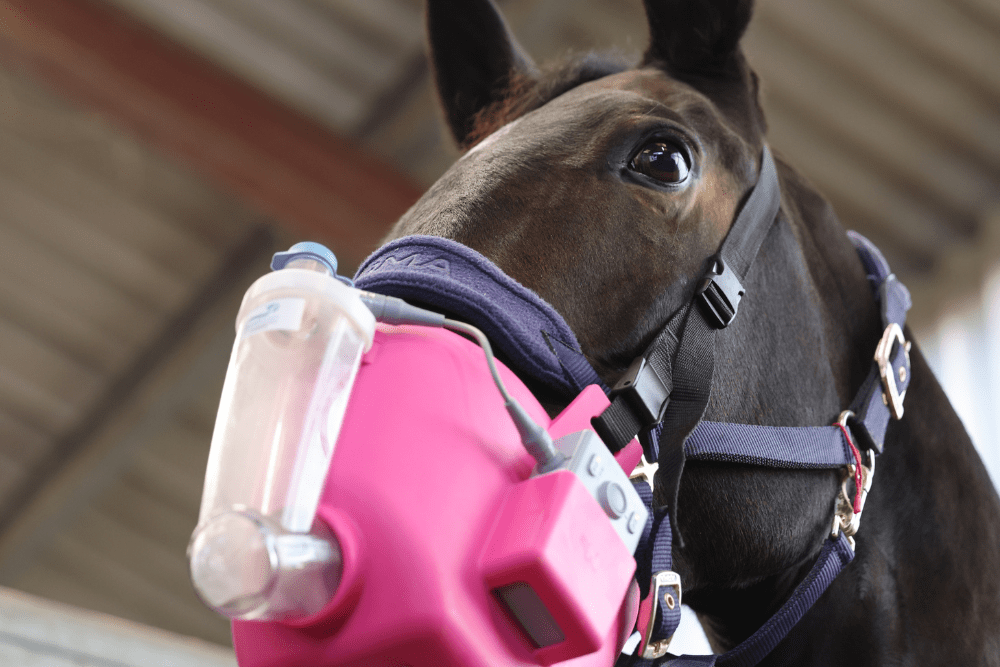
Nebulisation can play a valuable part in supporting horses with a respiratory condition. Nebulisers may be used to deliver prescribed medications or non-drug therapies, such as saline, to the airways directly through an inhaled mist. Saline can help to loosen mucus, making it easier for horses to breathe and clear mucus naturally.
Seasonal changes, such as the transition to spring, can be a time when saline nebulisation is particularly beneficial. The change from winter stabling to being outdoors in the spring can cause respiratory flare-ups, especially for horses with pollen allergies. These present in similar ways to a dust allergy, causing airway inflammation and hypersensitivity. This is something to be particularly aware of from late March into the summer when pollen count is typically at its highest. Other high-risk periods that could warrant the use of nebulisation are increased stabling or travel.
If you think inhaled therapies and nebulisation could be beneficial to support your horse’s breathing, speak to your vet who will be able to advise on the best management plan.
Creating a respiratory-friendly environment
Managing equine asthma isn’t just about medication or therapies like saline. While medication can help manage inflammation, it can’t help with the environmental triggers in the air that can cause an asthma flare. So, creating a respiratory friendly environment is just as important. This can be done by:
- Increasing turnout time for horses who are sensitive to dust or ammonia, giving them access to fresh, clean air
- Keep stables clean and well-ventilated
- Let your horse out of the stable when it’s time to muck out
- Stable horses with a pollen allergy in the day and turn out at night
- Use shredded paper, dust-extracted wood shavings or other low-dust bedding to reduce irritation on the airways
- Steam or soak hay prior to feeding
- Encourage feed foraging from the floor to increase airway drainage
In summary
Keeping a horse with airway disease feeling and performing at its best is all about management and prevention. Even mild inflammation can have an impact. Whether you’ve got training, competitions or simply increased time outdoors planned with your horse, it’s worth considering the steps you can take now to make the transition more comfortable for them.
Speak to your vet to learn more about the benefits of nebulisation and whether it can make a difference for your horse. Or, shop our range of equine nebulisers here.