
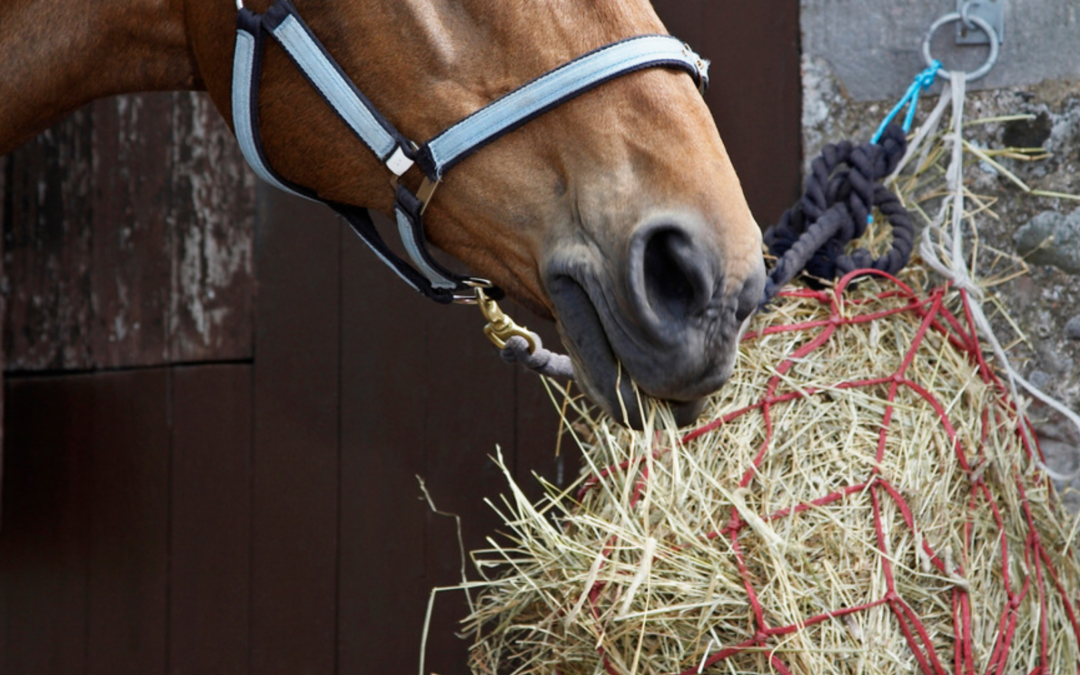
Hay is an essential part of most horses’ diets, providing the fibre needed to support healthy digestion and overall wellbeing. But every mouthful may also come with something you can’t see: a cloud of fine particles released right under your horse’s nose.
Even hay that looks and smells perfectly fine can contain microscopic dust particles, mould spores and other irritants. For horses with sensitive airways, these can trigger inflammation and respiratory problems – and over time, prolonged exposure can affect healthy horses too.
Given how many hours a day horses spend eating, understanding the link between dusty hay and horse respiratory health is one of the simplest ways to make a real difference to their wellbeing.
Why does forage matter for respiratory health?
Horses are obligate nasal breathers, meaning they rely entirely on their nasal passages to breathe. Their respiratory systems are also highly adapted for athletic performance, with enormous volumes of air moving through the lungs, particularly during exercise. That makes their respiratory system remarkably efficient, but also constantly exposed to whatever is in the air around them.
When horses eat hay, particularly from a haynet or raised feeder, dust and other particles can become airborne close to their nostrils. These particles may then be inhaled into the respiratory tract, where they can irritate the airways and contribute to inflammation.
Over time, repeated exposure to airborne irritants can affect the respiratory system’s natural defence mechanisms, making it harder to clear mucus and trapped particles.
This is particularly important for horses with existing respiratory conditions, such as equine asthma, but minimising dust exposure is a sensible management consideration for all horses.
What’s hiding in your horse’s hay?
Not all hay is created equal. Its quality can be influenced by several factors, including how it was harvested, dried, stored and handled.
Even good-quality hay may contain microscopic particles that aren’t visible to the naked eye.
Some of the most common include:
- Dust: Fine particles of dried plant material, soil and other environmental sources that can become airborne during feeding.
- Mould spores: Microscopic fungal particles that may develop when hay is harvested or stored in damp conditions.
- Bacteria and other microorganisms: These may be present within forage and contribute to its overall microbial load.
- Plant debris and pollen: Naturally occurring particles that can irritate sensitive airways.
While visibly dusty or mouldy hay should raise immediate concerns, forage that appears clean may still contain respirable particles small enough to reach the lower airways.
This is why dust free forage, or more accurately, low-dust forage, is an important consideration when managing respiratory health.
The link between dusty hay and equine asthma
Equine asthma is one of the most common chronic respiratory conditions affecting horses and ponies. It involves inflammation of the lower airways in susceptible horses, typically triggered by environmental allergens and irritants. Dust, mould spores and other particles found in forage are among the best-recognised culprits.
The inflammation causes the airways to narrow and produce excess mucus, making breathing more difficult and affecting a horse’s comfort, stamina and performance.
Signs to look our for include:
- Coughing, particularly during feeding or exercise
- Nasal discharge
- Increased breathing effort
- Reduced stamina or willingness to work
- Slower recovery after exercise
Not every horse will show obvious signs. In some cases, subtle changes in performance may be the first indication that something isn’t quite right.
If you notice any of these changes, speak to your vet.
Soaking vs steaming hay: what’s the difference?
Soaking and steaming are the two most common ways to reduce dust in hay, but they work differently and can have different effects on forage quality too.
Soaking hay
Soaking involves submerging hay in water before feeding. This helps dampen loose particles, reducing the amount of dust released into the air while the horse eats.
Soaking is also commonly used to reduce the water-soluble carbohydrate content of hay for horses with certain metabolic or dietary needs.
The trade-off is that other valuable nutrients are leached out along with the sugars, and soaking doesn’t reliably reduce microbial contamination. Prolonged soaking may even encourage bacterial growth, particularly in warmer weather.
Steaming hay
High-temperature hay steaming uses heat and moisture to reduce respirable dust and viable microorganisms, including mould and bacteria. Because the hay isn’t submerged, it does this without the same degree of nutrient loss.
Not all steaming is equal though. The temperature reached and how effectively steam penetrates the hay can influence the outcome. Purpose-built systems, such as Haygain steamers, are designed to distribute steam throughout the forage, making them a practical option for owners looking to improve forage hygiene.

Creating a respiratory-friendly feeding routine
Good forage quality is the starting point, but how and where you feed it – and the wider stable environment – also influence the amount of dust your horse inhales.
- Consider feeding position
Feeding forage at floor level, where appropriate, encourages a more natural head and neck position. This can support the normal drainage of mucus and particles from the respiratory tract.
- Store hay well
Keep forage in a dry, well-ventilated area to limit mould growth.
- Keep forage storage separate from stabling
Where possible, avoid storing or handling large quantities of hay close to horses, as this can release dust into their airspace.
- Pay attention to stable ventilation
Good airflow reduces airborne dust and ammonia, so resist the urge to shut stables up completely in cold weather.
- Consider the wider stable environment
Low-dust bedding, regular mucking out (ideally while horses are out of the stable) and maximising turnout where appropriate can all help reduce overall exposure to respiratory irritants.
Small changes can make a difference
Maintaining good horse respiratory health isn’t just about recognising problems when they arise. It’s also about considering the everyday factors that influence what your horse breathes.
Forage is one of the most consistent sources of potential airborne irritants in a horse’s environment, making it an important place to start.
Whether that’s improving hay storage, adjusting feeding practices or switching to high-temperature hay steaming, reducing exposure to dust and other particles can help create a healthier respiratory environment.
Interested in improving your horse’s forage quality? Explore our range of Haygain hay steamers and discover how high-temperature steaming can you build a low-dust feeding routine.